




In France, some desserts are more than a dessert. They are a statement, a gesture, a commitment to a rhythm of life that requires you to stop, take small sips of coffee, and let the aroma of almonds slowly dissolve between your teeth. The macaron never shows off, but it is itself a fairy tale. And in this fairy tale, each macaron is a small verse.
A City’s Signature, a Gift for All Seasons
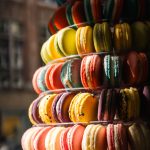
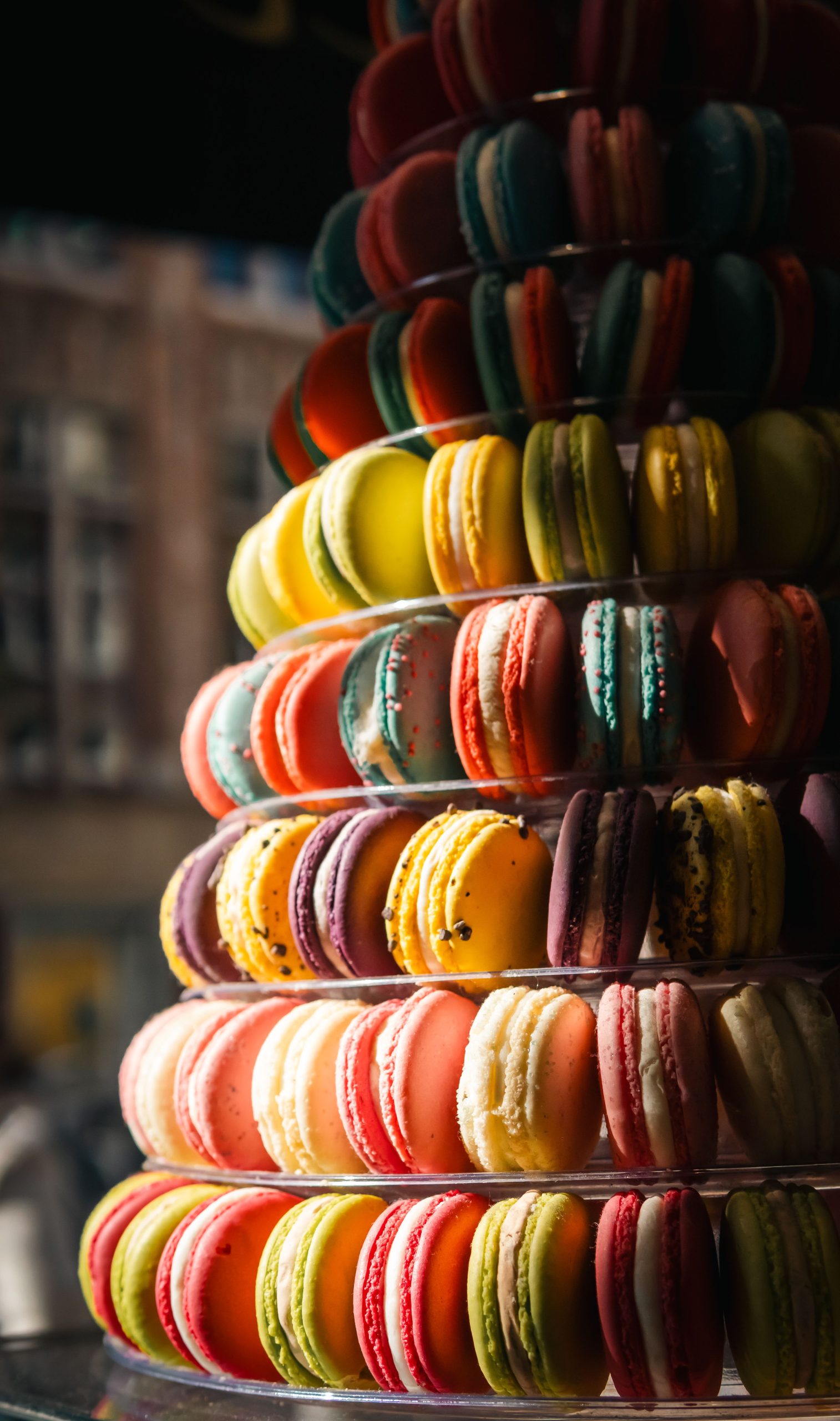
In Paris, if you mention dessert without saying macaron, people will wonder if you have truly been to this city. This dessert is so deeply rooted that in every season, it nearly replaces every other dessert. No clumsy bulk. No piles of cream. Just a light, filled little round shell, its surface smooth as a mirror, its foot delicate as lace.
In 2010, Pierre Hermé introduced the Ispahan flavor, a combination of rose, lychee, and raspberry, and the entire food world nearly fell to its knees. No one argued whether this was innovation. No one questioned whether it was too avant garde. When it comes to macarons, the French simply nod. They understand.
An Honest and Generous Dessert
The macaron does not play tricks. Its ingredient list is so short it makes you suspicious. Almond flour, powdered sugar, egg whites, granulated sugar, a touch of food coloring, and for the filling, buttercream or ganache. No thousand layer complexity of puff pastry. No towering grandeur of cream puffs. Just almonds. The finest, most fragrant almond flour, the kind that is sifted and resifted again and again until it becomes as soft as fine sand.
Of course, an amateur might substitute peanut flour. A reckless pastry shop might add preservatives. But in the apprentice kitchens of Paris, there is only one truth. If the almond flour is not fine enough, if the egg whites have not been whipped to the perfect soft peak, if the resting time is not long enough, do not make the macaron.
The preparation has an almost ritual beauty. Egg whites are whipped in a copper bowl, gradually turning snowy white and glossy, as soft as clouds. Sugar syrup is boiled to 118 degrees and poured in slowly. Then comes the crucial step. The mixture of almond flour and powdered sugar is folded in in batches. Do not overmix. Do not deflate the bubbles. The batter should fall in a continuous ribbon. The piping bag deposits the batter evenly onto the baking sheet. Rest. Wait for a thin skin to form on the surface. The oven door is left slightly open. Magic happens. The foot rises quietly, the thin, crisp shell encasing the soft, slightly chewy interior, like a small, sweet universe.
The Awakening of the First Bite
The macaron does not wait for you to be ready. From the moment it comes out of the oven, it calls to you. The toasted aroma of almonds and the buttery scent of the filling rise together, the shell nearly crumbling at the lightest touch of your fingers. The first bite requires patience. Bite too hard, and it will shatter too quickly. Hesitate too long, and the filling will squeeze out the other side.
The first taste. The shell cracks between your lips and teeth, then immediately melts, releasing the warmth of almonds and the richness of the filling. The second taste. The contrast between crisp and soft, sweet and slightly salty, like morning and evening meeting in the same sky. The third taste. You realize this is not just a dessert. It is time captured in a single round shell. It is the sunlight of an afternoon on Paris’s Left Bank, the focus of a baker whipping meringue at four in the morning, a drop of dew condensed on a rose petal, all in this one bite.
By the fourth taste, you have stopped analyzing. You just eat. Then a bit of filling sticks to your finger, and you hesitate whether to lick it clean. In Paris, no one would mind that.
A Dessert That Belongs to Everyone
From Paris to Tokyo, from New York to Beirut, the macaron appears at every occasion that calls for sharing. It rests in Ladurée’s velvet ribboned boxes, and also in homemade tins at family gatherings. It is stacked into towers at weddings as wedding favors, and carefully tied with a ribbon on Valentine’s Day.
There is no single correct recipe. Some people love salted caramel. Some swear that pistachio is the real classic. Some insist on adding a small piece of fresh raspberry to the filling, while purists say that will ruin the dryness of the shell. But they add it in private anyway. These variations are not disagreements. They are the beauty of difference. Everyone’s macaron is different, because everyone’s hand temperature is different, everyone’s oven is different, and the humidity outside the window while waiting for the skin to form is different.
A Dessert That Does Not Travel Well, and That Is the Point
You will never find a real macaron on a supermarket shelf. You will not see it in the dessert window of a fast food restaurant. It resists commercialization because it resists everything that makes things convenient but steals their soul.
The macaron requires dry air. It requires the meringue to be just right. It requires someone willing to spend two hours in the kitchen just to have ten minutes of perfect afternoon tea. It cannot withstand humidity. It cannot be roughly stuffed into a suitcase. It cannot be made a week in advance and left waiting to be eaten. It is simply itself, right here, right now.
If one afternoon you happen to pass through Paris, past the sage green shopfronts on Rue Saint Germain, past the rows of colorful little rounds arranged in the glass window, stop. Buy one. No matter what flavor it is, no matter whether you eat it standing on a street corner or sitting on a bench along the Seine. Bite into it. Do not speak. Let it be exactly what it is.
Then you will understand why some people say the macaron is not a dessert. It is a love letter written to you by Paris, in almond flour and sugar.