





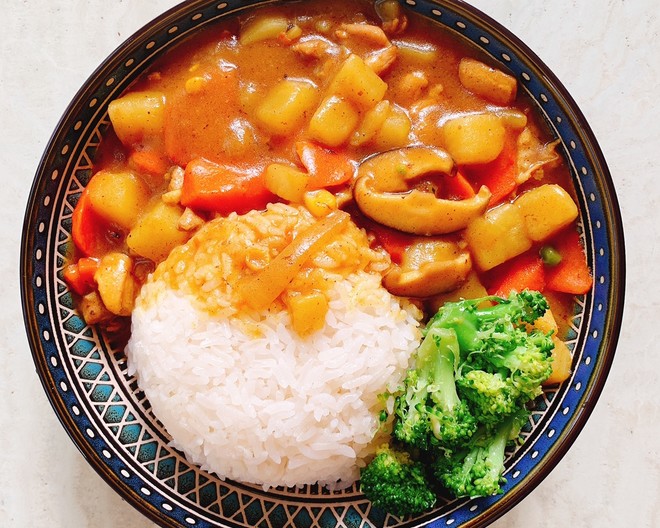
Whenever the seasons shift towards autumn and winter, the body instinctively craves that rich, warm, and comforting food,the kind that warms you from the stomach to the soul. Unlike clear broths, what you need at this time is a steaming pot of Japanese curry. It isn’t as boldly spicy as Indian curry; instead, it possesses a mellow richness brought by fruit puree and butter.
The magic of this dish doesn’t lie in expensive ingredients, but in the patiently sautéed caramelized onions and that crowning touch: the butter roux,which is what gives the curry sauce its silky-smooth, clingy texture.
🛒 Ingredients (Serves 2 to 3)
| Category | Ingredient | Quantity |
|---|---|---|
| Main Items | Boneless Chicken Thighs | 300 g |
| Potatoes | 2 (medium) | |
| Carrot | 1 | |
| Yellow Onion | 1 (large) | |
| Steamed Rice | For serving | |
| Seasoning & Broth | Japanese Curry Roux Blocks | 4 small cubes (~80g) |
| Water (or Chicken Stock) | 600 ml | |
| Milk (or Coconut Milk) | 100 ml | |
| Fukujinzuke Pickles (Optional) | For garnish | |
| Secret Weapon | Butter Roux | See instructions below |
✨ The Soul of the Dish: Butter Roux
The reason Japanese curry stays thick without separating and shines with a glossy finish lies entirely in this step.
- Butter 40g
- Cake Flour (Low Gluten) 40g
[Key Technique]
Melt the butter in a small pot over very low heat. Add the flour and stir continuously without stopping. Keep the heat minimal and cook until the mixture forms a pale, moist paste resembling mashed potatoes. Do not let it brown, or the sauce will taste bitter. This roux is not only a thickener for curry but also the base for many Western-style cream stews.
🍛 Detailed Cooking Steps
Step 1: Prepare the Ingredients
Pat the chicken thighs dry with a paper towel and cut into bite sized pieces. Season lightly with salt and black pepper. Cut the potatoes and carrots into rolling wedges. Slice the onion thinly along the grain,the thinner, the better, as this is the source of the sweetness.
Step 2: Slow-Cook the Onions (Time-Consuming but Worth It)
Heat oil in a pot over medium-low heat. Add the onion slices and a pinch of salt. Sauté slowly over medium low heat. This requires patience about 10 to 12 minutes. Cook until the onions have released their moisture, reduced in volume, and turned a caramel or light brown color. At this point, the pungent spiciness has transformed into concentrated sweetness.
Step 3: Sauté to Lock in Flavor
Push the caramelized onions to one side of the pot. Add the chicken thighs and sear until golden on both sides. Then, add the potatoes and carrots, stir frying everything together for 2-3 minutes to coat the vegetables in oil and initiate the Maillard reaction.
Step 4: Simmer and Blend
Pour in 600 ml of water or chicken stock just enough to barely cover the ingredients. Bring to a boil over high heat, skim off any foam, then cover and reduce heat to medium. Simmer for about 12-15 minutes, or until a potato cube can be easily pierced with a chopstick.
Step 5: Turn Off Heat to Dissolve (The Golden Rule)
This is the iron law for a smooth texture: Turn off the heat first. Break the curry roux blocks into the pot and stir gently until completely dissolved. Doing this off the heat prevents the curry powder from clumping or becoming bitter due to high temperatures.
Turn the heat back to very low. Add the 100 ml of milk and the prepared butter roux. At this stage, you must stir slowly and continuously. You will see the broth transform into a silky, thick sauce within 30 seconds. If it gets too thick, add a splash of hot water to adjust. If it’s too thin, stir a little longer.
🍽️ Plating Suggestions
Scoop a mound of hot, fluffy white rice onto one side of a deep plate. Ladle the thick curry sauce generously beside the rice. No need for elaborate arrangement,the deep mahogany hue of the sauce is a visual feast in itself. Top with a few slices of red Fukujinzuke pickles; their sweet and sour crunch cuts through the richness instantly.
Take a spoonful while it’s hot: the chicken is tender, the potatoes are meltingly soft, and the sauce is intensely savory with a subtle hint of milky sweetness. This is the most solid form of happiness for the autumn and winter seasons.
This Article Was Generated By AI.